Tribute to Dr. Nakas of Bosnia
|
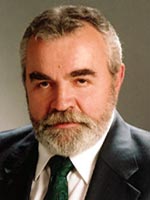 Dr. Nakas Dr. Nakas |
 Printer
Friendly Page
Printer
Friendly Page Each
day, before downloading my email, I mentally prepare myself for dealing
with the good, the bad, and the ugly. With hundreds of disciples and
many other devotees regularly corresponding with me, the laws of nature
force me to see the gamut of situations in this world.
March 16, 2006, was no exception. There were names to be given for
babies, condolences for the families of departed souls, blessings for
disciples (and chastisements for two), guidelines for a new marriage,
and a plea for a departed student to return.
One name on the list in my mailbox caught my eye. It was Jahnukanyaka
Dasi, a devotee from Sarajevo, Bosnia. I had met her years ago, on my
first visit there. She risked her life to preach throughout the
three-year war that took over 100,000 lives there in the early 1990s.
Such a devotee deserves attention, so I immediately opened her email.
I was hoping to read of the recent success the Sarajevo devotees had
had in book distribution, but instead I learned with great sadness of
the departure of a good friend of mine, Doctor Abdulah Nakas.
I
first met Dr. Nakas in April 1996 in the bloodstained hallways of the
partially destroyed central hospital in Sarajevo just days after the
war had ended. Our chanting party had been attacked by knife-wielding
Muslim soldiers that day, and several of our devotees had been
seriously wounded.
After taking the other devotees back to the temple, I went to the
hospital to check on the injured. When Dr. Nakas heard that a leader of
our movement was there, he came out to meet me. "Your people's wounds
are serious," he said, "but not critical. They will live."
He raised his arms in the air. "I am a devout Muslim," he said, "but I
am ashamed of what my people have done. The war is over, but now we are
spilling the blood of foreigners in our town. Please forgive us."
He put out his hand. "We are brothers," he said, in a gesture of
humility I will never forget.
I took his hand, red with the blood of the devotees and still holding a
scalpel. "Doctor," I said, "you are not to blame, and neither is your
religion. This is the act of a fringe element."
He once again turned his attention to the injured devotees.
While I was waiting, some of the soldiers who had attacked us came to
the hospital to finish the job. They surrounded me and spit in my face.
Dr. Nakas heard the commotion. He rushed out of the operating room and
screamed at the soldiers to leave. Although he was defenseless and had
no weapons, they backed down and went away.
Jahnukanyaka told me that day that everyone in Sarajevo respected him
because of his selfless service during the war. For three years he
operated continuously, day in and day out, and often throughout the
night on the endless casualties. He performed surgery under the worst
of circumstances, often with no water or electricity and few medical
supplies. During the last two years of the war the hospital had no
anesthesia. He barely ate or slept. And several times the hospital
itself was attacked and severely damaged by rocket fire.
"How was it possible?" I asked her. "Where did he get the strength?"
She smiled. "During the war," she said, "several devotees and I would
regularly visit the hospital, bringing prasadam and sometimes
having
programs for the patients and medical staff. During those days it was
dangerous just to walk outside because the Serbian Army had encircled
the city and would indiscriminately fire rockets and shoot citizens
daily."
"It was there at the hospital that I met Dr. Nakas," she continued.
"Somehow or other, he had acquired a Bhagavad-gita and
would read it to
his colleagues before the surgeries. He said it helped him realise the
immortality of the soul and gave him strength as he watched people die
before his eyes.
"I was amazed that a staunch Muslim, who visited his mosque daily, was
not only reading Bhagavad-gita, but sharing it with
others. When I was
distributing books at that time, most of the Muslim doctors I
approached bought Bhagavad-gita because they knew it was
Dr. Nakas's
reading material."
"That makes everything clear," I said.
Now, years later, I was sitting in front of my computer, remembering
our conversation and feeling overwhelmed by that morning's email. I
found Jahnukanyaka's phone number in Sarajevo and called her.
"I received your email about Dr. Nakas," I said. "I'm sorry to hear of
his departure. He was an great person, able to bridge gaps that often
separate men because of nationality, race, and religion."
"Here in Sarajevo," she said, "he is being mourned by everyone,
Muslims, Christians, and Jews."
"Did he remain connected to us and maintain an interest in
Bhagavad-gita after the war?" I said.
"Yes, he did," she replied. "After the war I visited London, and when I
came back to Sarajevo, I brought prasadam [sanctified food] to
Dr.
Nakas. During our discussion he offered to help us find a building for
a new temple in Sarajevo. I was surprised because I knew it would not
be an easy thing. Bosnia is primarily a Muslim country.
"During the war I developed a hernia from carrying so many books, and
when I told Dr. Nakas he offered to operate on it for free. He told me
I was his Godsister. The nurses told me that while performing the
operation he recited many verses by memory from Bhagavad-gita.
"He never took a vacation in his entire career. After the war he just
continued doing his service, operating every day. Recently he had a
heart attack. He was operated on but lapsed into a coma. He was in
intensive care and only the medical staff were allowed entry. I called
his brother, the director of the hospital, and begged him to let me go
to his brother's side.
"To my surprise he let me go, after making sure I was properly dressed
in a surgical mask and gown. There were many doctors and nurses present
when I entered Dr. Nakas' room. He was such a famous, much-loved, and
respected man. They were trying everything to save him.
"Initially, I was shocked seeing all the tubes and machines keeping him
alive. Despite the fact that most of the medical staff there were
Muslim, I began reading out loud from his favorite chapter of Bhagavad-gita,
chapter nine. All the doctors and
nurses bowed their
heads respectfully and remained silent as I read the entire chapter.
"Several days later they contacted me and asked me to come back a
second time. I saw it as a special arrangement of Krsna for Dr. Nakas.
On that visit I sang the Damodar-astakam prayers and the Hare Krishna mantra,
and read the seventh chapter of Bhagavad-gita.
Again the entire
staff listened respectfully. They knew it was what Dr. Nakas would have
wanted.
"Two days later he died. I went to his funeral with some devotees.
There were more than 10,000 people attending. He was a national hero.
The people of Sarajevo loved him so much. He was buried according to
the Muslim tradition. But you can imagine - there we were, dressed in
our traditional Vaisnava attire. No one complained. They all knew how
much he loved us, and we him."
As she spoke I couldn't hold back my tears, and they were not only for
the fact that Dr. Nakas had so much appreciation for the Bhagavad-gita
and had helped devotees at the end of the war and after, but because of
my own encounters with him. I could still envision him apologising for
the wrong his Muslim brothers had inflicted upon us and his screaming
at the soldiers who had come to kill me. They were some of the most
intense moments I have ever experienced, and he had played an integral
part in saving my life and those of our wounded devotees.
When I finished my call with Jahnukanyaka I went before my Deities,
bowed down, and prayed that the Lord would honor the devotional service
Dr. Nakas had performed as a devout Muslim and as a follower of the
sacred wisdom of Bhagavad-gita. The world has much to
learn from Dr.
Nakas: how to live peacefully together with respect and appreciation
for other cultures and religions.
Indradyumna Swami

Indradyumna Swami, disciple of His Divine Grace A.C. Bhaktivedanta Swami Prabhupada, is perhaps best known for his Polish "Festival of India" tour, but has travelled extensively throughout the East European nations as well as to Russia and Ukraine, South Africa, Australia, New Zealand, Hungary, and South America. Read more from Indradyumna Swami's Diary of a Travelling Preacher website
My Muslim Brother/ WORLD SANKIRTAN PARTY ©2004 - Hansadutta das
Home | About | Events | World Sankirtan Party | Inside Nam Hatta
eBooks | Site Map | Store